Danem Test

Machinery Safety Testing & CE Marking

Independent safety assessment and technical guidance to support CE marking for machinery and industrial equipment.

Our services support manufacturers in preparing machinery for EU market access through definition of applicable requirements, risk assessment support, technical documentation review, and coordination of safety verification activities where required.

Machinery safety evaluation ensures that equipment is designed to reduce risks throughout its lifecycle, including installation, operation, maintenance, and reasonably foreseeable misuse.

our approach to MD testing and certification

Assessment is typically performed against relevant harmonised standards and technical specifications supporting the presumption of conformity.

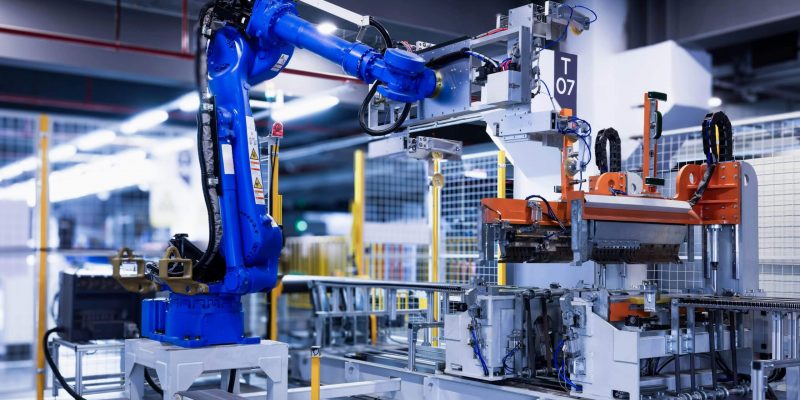
Typical products include industrial machinery, automated production systems, packaging and processing equipment, robotics and integrated production lines, lifting and handling equipment, and special-purpose machinery.

Heavy machinery

Industrial automation

Robotics and integrated product lines

Construction and building

Agriculture and forestry

Transport and logistics

Directive (EU) 2006/42/EC establishes the essential health and safety requirements for machinery placed on the European market.

Machinery safety compliance is based on a structured approach to risk reduction and includes:

  • Risk assessment and risk reduction measures 
  • Safety-related control systems 
  • Protective guards and safety functions 
  • Emergency stop systems 
  • Electrical and mechanical safety integration 
  • User information and instructions for use 

Assessment is typically performed against relevant harmonised standards and technical specifications supporting the presumption of conformity.

MD CERTIFICATION PROCESS

Scope definition & Readiness Review

Identification of applicable regulatory requirements based on machine type, intended use, and operational environment under Directive (EU) 2006/42/EC.

Risk Assessment and Documentation Review

Evaluation of hazard identification, risk reduction measures, and technical documentation supporting machinery safety.

Verification and Testing Coordination

Coordination of verification activities where required to support safety-related claims and compliance evidence.

CE Documentation and Market Readiness

Preparation of technical documentation supporting CE marking, including risk assessment records and user instructions.

join the success

WHY DANEM TEST & CERTIFICATE

EU Machinery Regulation 20231230 - What Manufacturers Must Prepare Before 2027 - Danem - 7.04.2026
  • Global Expertise
    International team supporting certification and compliance projects worldwide
  • Independent Assessment
    Transparent and impartial certification, testing, and audit processes
  • Prompt communication and fast response times. Faster certification and testing processes through responsive communication, streamlined workflows, and continuous project oversight.
  • Structured Certification Pathways
    Clear project planning from assessment through approval
  • Technical & Regulatory Knowledge
    Support across certification, testing, regulatory requirements, and market access.

FAQ

ask us
anything

Yes. A risk assessment is a fundamental and mandatory requirement under the Machinery Directive (2006/42/EC) and related safety standards.

The manufacturer is required to identify and evaluate all relevant hazards associated with the machinery throughout its lifecycle, including normal operation, maintenance, cleaning, and foreseeable misuse. The results of the risk assessment must be used to eliminate or reduce risks as far as possible through design and protective measures.

The risk assessment must be documented and included as part of the technical file supporting CE marking.

Under EU requirements, “machinery” generally refers to an assembly of linked parts or components, at least one of which moves, and which are joined together for a specific application. It also includes assemblies intended to be installed and operated as a single unit to perform a defined function.

This definition covers a wide range of products such as industrial machines, production equipment, processing and packaging machines, lifting and conveying equipment, construction machinery, agricultural machinery, and automated production systems.

It also includes interchangeable equipment, safety components, lifting accessories, and partly completed machinery intended to be incorporated into a final machine.

A product-specific assessment is required to determine whether a device falls under the Machinery Directive (2006/42/EC) or related EU legislation.

Functional safety systems, such as safety PLCs, are not mandatory for all machinery. However, they are often required when risk assessment identifies safety functions that cannot be adequately addressed through inherent design measures or fixed protective devices.

The need for functional safety depends on the results of the risk assessment and the level of risk associated with the machine’s intended use and foreseeable misuse. Where safety-related control functions are required, these must be designed and implemented in accordance with applicable standards, such as EN ISO 13849-1 or IEC 62061.

Functional safety measures are therefore applied on a case-by-case basis to ensure that residual risks are reduced to an acceptable level.

The key starting point for compliance with the Machinery Directive (2006/42/EC) is a clear and complete technical description of the machine, including its intended use, operating conditions, and functional characteristics.

In practice, the most important initial document is the machine specification or technical file basis, which typically includes drawings, system descriptions, control architecture, and preliminary risk information. This documentation is used to perform the initial conformity assessment and risk assessment.

Without a defined technical scope and product description, it is not possible to correctly identify applicable requirements, standards, or conformity assessment procedures.

The duration of Machinery Directive (MD) preparation depends on the complexity of the machine, the level of design maturity, and the completeness of the available technical documentation.

For standard machinery with well-defined specifications and established safety concepts, the preparation process may take a few days to a couple of weeks. For complex or custom-built machinery, including integrated production lines or systems requiring functional safety assessment, the process may take several weeks or longer.

Additional time may be required if design modifications, risk reduction measures, or further verification testing are needed to demonstrate compliance with applicable requirements under the Machinery Directive (2006/42/EC).

GET IN TOUCH

Questions about our certifications or support plans? Let's talk.